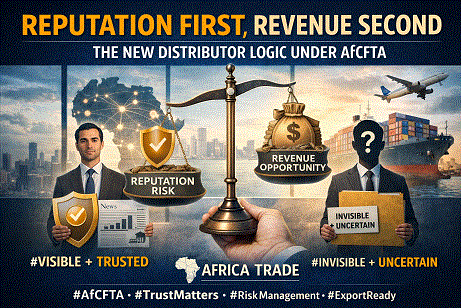
 Across Africa’s integrated trade landscape, one quiet shift is reshaping who wins distribution partnerships and who never receives a callback. It is not pricing. It is not capacity. It is not even geography. It is visibility.

Across Africa’s integrated trade landscape, one quiet shift is reshaping who wins distribution partnerships and who never receives a callback. It is not pricing. It is not capacity. It is not even geography. It is visibility.
Climate change and disaster risk are reshaping the development landscape across Africa. Floods, cyclones, droughts, and extreme weather events now occur with greater frequency and severity, placing sustained pressure on communities, governments, and humanitarian systems.
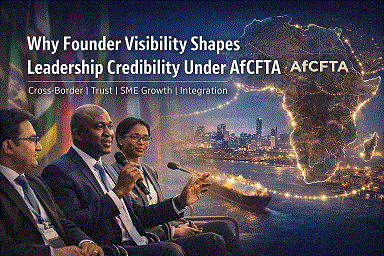
As African companies expand beyond domestic markets, leadership becomes part of the commercial equation. Under the African Continental Free Trade Area (AfCFTA), businesses are no longer assessed only within familiar local ecosystems.
In cross-border business, speed matters. Opportunities under Africa Continental Free Trade Area (AfCFTA) often emerge quickly, and those who can move faster gain advantage. One of the least discussed but most influential factors in this process is the strength of a company’s media footprint.
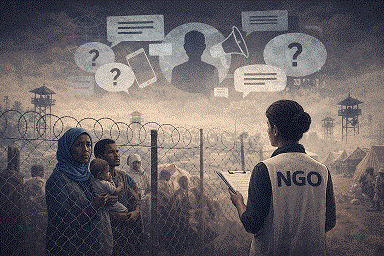
Refugee and displacement responses are among the most scrutinized areas of humanitarian work. Programs operate under intense public attention, complex political dynamics, and heightened donor accountability. In such environments, ambiguity about an organization’s credibility can quickly translate into operational risk.
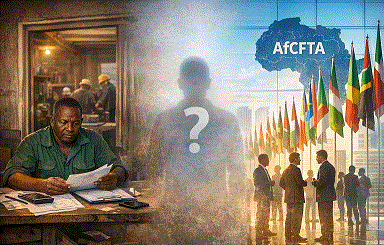
Many African small and medium enterprises (SMEs) believe that staying quiet publicly is a sign of seriousness. They focus on operations, production, and internal growth, assuming that visibility will naturally follow once results are achieved. In local markets, this approach may have worked in the past. Under AfCFTA, however, silence has become a strategic risk.
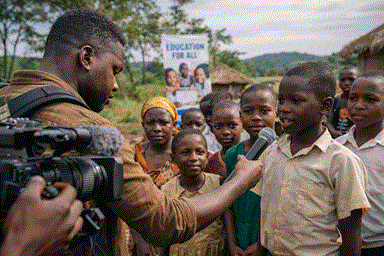
Education is one of the most transformative development interventions, yet it is also one of the most resource-intensive and long-term. Unlike emergency response or short-cycle humanitarian aid, education programs require sustained funding, institutional continuity, and long-term trust between donors, governments, and implementing organizations.
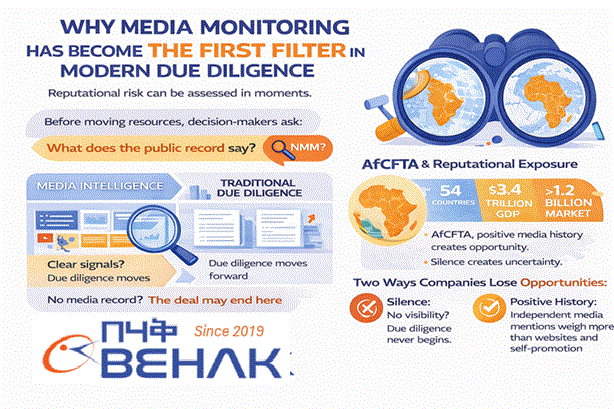
Due diligence is often associated with formal reviews—financial statements, legal documents, and compliance checks. While these steps remain essential, they are rarely the starting point. In modern cross-border business, due diligence usually begins with something far simpler: media monitoring.
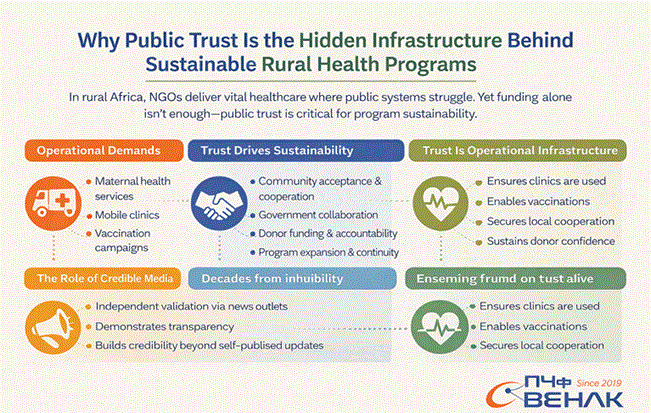
In many parts of Africa, access to basic healthcare still depends heavily on non-governmental organizations. Rural and hard-to-reach communities often rely on NGOs for maternal health services, vaccination campaigns, disease prevention, mobile clinics, and health education. While these programs are operationally demanding, their sustainability depends on more than medical expertise and funding. It depends on public trust.