Shaping the Story: Why NGOs Must Own Their Development Narrative

Shaping the Story Why NGOs Must Own Their Development Narrative
Development work rarely unfolds in isolation. Across Africa, non-governmental organizations operate within complex environments where public perception, policy debates, and media narratives often influence how development initiatives are understood.

Read more

When False Narratives Undermine Development Work

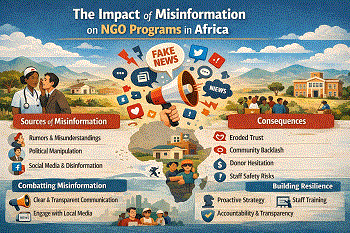
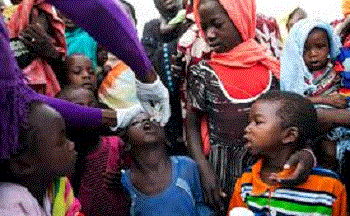
When False Narratives Undermine Development WorkMisinformation has become a growing challenge for organizations working in the development sector. Across Africa, NGOs deliver programs addressing healthcare, education, climate resilience, humanitarian assistance, and governance. These initiatives often involve complex technical approaches that can be difficult for non-specialists to interpret.
Read more

Ethiopia’s Key Travel Destinations: History, Nature, and Culture

Ethiopia’s Key Travel Destinations: History, Nature, and Culture

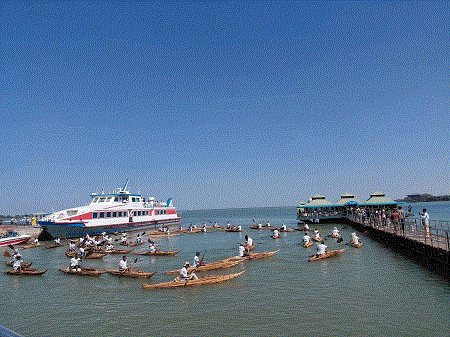
Ethiopia’s tourism appeal lies not in a single landmark but in a mosaic of regions, each with its own historical depth, ecological richness, and cultural traditions.

Read more

How NGOs Recover From Reputational Damage

How NGOs Recover From Reputational Damage

Reputational challenges are an inevitable part of operating in complex development environments. Non-governmental organizations work at the intersection of social expectations, political sensitivities, and operational realities. In such settings, even well-managed programs can encounter scrutiny, criticism, or misunderstanding.

Read more

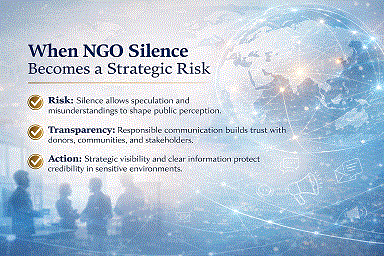
When NGO Silence Becomes a Strategic Risk

When NGO Silence Becomes a Strategic Risk

Across Africa’s development landscape, many non-governmental organizations operate under a longstanding assumption: that maintaining a low public profile helps protect neutrality and reduce exposure to controversy. In certain contexts this instinct is understandable. Development programs often operate in sensitive environments where public visibility must be managed carefully.

Read more

How Thought Leadership Positions African Companies for Investment

How Thought Leadership Positions African Companies for Investment

Across Africa’s rapidly expanding economies, companies increasingly compete not only through products and services but also through the credibility of their ideas and strategic vision. Investors evaluating emerging markets frequently seek companies that demonstrate both operational capability and intellectual leadership within their sectors.

Read more

How International Companies Should Communicate When Entering Ethiopia

How International Companies Should Communicate When Entering Ethiopia

As Ethiopia continues implementing economic reforms and expanding engagement with international markets, the country is attracting growing interest from multinational companies, investors, and development organizations. For many of these institutions, entering Ethiopia represents an opportunity to participate in one of Africa’s largest and most dynamic emerging economies.

Read more

How Misinformation Undermines Development Programs

How Misinformation Undermines Development Programs

Development programs often operate in environments shaped by uncertainty, limited information, and high public expectations. In these settings, misinformation can spread quickly and influence how communities, donors, and policymakers perceive humanitarian and development initiatives. For non-governmental organizations, misinformation represents a growing operational risk.

Read more

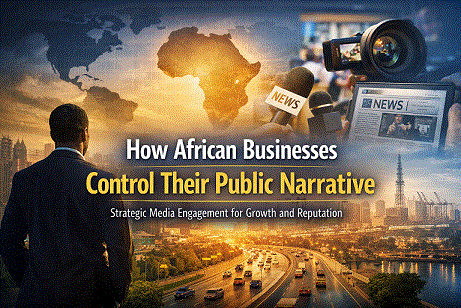
The Art of Controlling Public Narratives

The Art of Controlling Public Narratives

Across Africa, businesses are expanding into new markets and attracting increasing attention from investors and international partners. As regional trade frameworks and digital platforms reshape the business environment, public perception has become an important factor influencing commercial success. Companies are often evaluated not only by their operational performance but also by how clearly they communicate their mission, expertise, and values.

Read more

Why NGOs Advancing Women’s Rights Need Strong Media Positioning

Why NGOs Advancing Women’s Rights Need Strong Media Positioning

Programs that advance women’s rights and gender equality often operate in environments shaped by deeply rooted social norms, legal sensitivities, and political considerations.

Read more