
Development programs often operate in environments shaped by uncertainty, limited information, and high public expectations. In these settings, misinformation can spread quickly and influence how communities, donors, and policymakers perceive humanitarian and development initiatives. For non-governmental organizations, misinformation represents a growing operational risk.
Across Africa, NGOs implement programs addressing healthcare, education, climate resilience, governance, and humanitarian assistance. These initiatives frequently involve complex interventions whose outcomes unfold gradually. When misinformation circulates about such programs, it can distort public understanding and undermine trust before accurate information has time to spread.
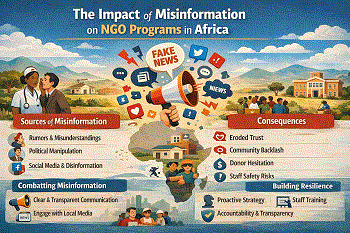
Misinformation may emerge from many sources. In some cases, it originates from misunderstandings within communities unfamiliar with program objectives. In others, political actors, competing organizations, or social media narratives amplify inaccurate claims. Digital communication platforms allow such narratives to circulate widely and rapidly.
The consequences can be significant. Communities may become skeptical of programs intended to support them. Local authorities may question the legitimacy of interventions. Donors may seek additional assurances before continuing support. Staff safety may also be affected if misinformation creates hostility toward organizations working in sensitive environments.
Preventing misinformation is rarely possible. Responding to it effectively, however, is essential.
Strategic communication plays a critical role in reducing the impact of misinformation. When NGOs maintain consistent public narratives through credible information channels, they create reference points that help audiences distinguish verified information from speculation.
Independent media engagement is particularly valuable. Responsible journalism can contextualize development initiatives, explain program objectives, and clarify misunderstandings. When accurate reporting exists in credible outlets, it becomes easier for stakeholders to verify information and resist misleading narratives.
Transparency also strengthens resilience against misinformation. Organizations that communicate openly about program goals, implementation challenges, and lessons learned demonstrate accountability. This transparency reassures stakeholders that the organization has nothing to conceal.
Another important element is proactive engagement with local communities. When beneficiaries understand how programs operate and why certain decisions are made, they are less likely to believe misleading narratives.
Internal communication systems also matter. Staff members should understand how to respond when misinformation arises and where to direct inquiries. Consistent messaging prevents confusion and ensures that accurate information reaches stakeholders quickly.
For NGOs operating in complex development environments, misinformation should be treated as a strategic risk rather than an occasional inconvenience. Organizations that anticipate misinformation and prepare communication responses in advance are better positioned to protect their credibility.
Ultimately, development work depends on trust. When misinformation undermines that trust, program effectiveness can suffer.
By investing in transparent communication, credible media engagement, and community dialogue, NGOs can strengthen their resilience against misinformation and ensure that their work continues to serve communities effectively.