
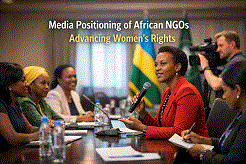
Programs that advance women’s rights and gender equality often operate in environments shaped by deeply rooted social norms, legal sensitivities, and political considerations.
NGOs in Africa
How Media Visibility Impacts Climate, Disaster NGOs in Africa
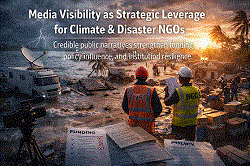
Climate change and disaster risk are reshaping the development landscape across Africa. Floods, cyclones, droughts, and extreme weather events now occur with greater frequency and severity, placing sustained pressure on communities, governments, and humanitarian systems.
Reputational Ambiguity of NGOs Working With Refugees
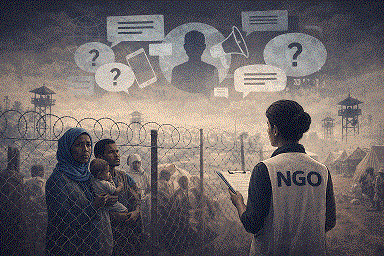
Refugee and displacement responses are among the most scrutinized areas of humanitarian work. Programs operate under intense public attention, complex political dynamics, and heightened donor accountability. In such environments, ambiguity about an organization’s credibility can quickly translate into operational risk.
Securing Long-Term Donor Commitment for Education NGOs
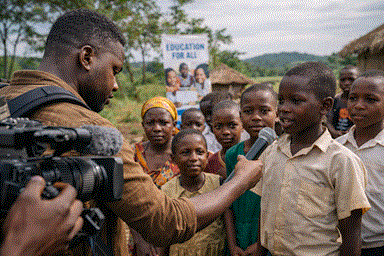
Education is one of the most transformative development interventions, yet it is also one of the most resource-intensive and long-term. Unlike emergency response or short-cycle humanitarian aid, education programs require sustained funding, institutional continuity, and long-term trust between donors, governments, and implementing organizations.
How NGOs Can Build Public Trust to Sustain Rural Health Programs
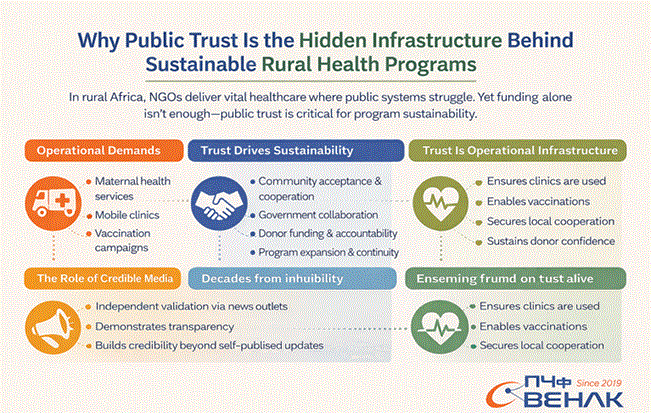
In many parts of Africa, access to basic healthcare still depends heavily on non-governmental organizations. Rural and hard-to-reach communities often rely on NGOs for maternal health services, vaccination campaigns, disease prevention, mobile clinics, and health education. While these programs are operationally demanding, their sustainability depends on more than medical expertise and funding. It depends on public trust.