
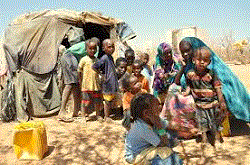
Programs addressing healthcare, education, climate resilience, governance reform, and humanitarian assistance frequently attract attention from journalists, researchers, policymakers, and community stakeholders.
In such environments, the way development initiatives are described publicly can significantly shape how they are perceived.
For NGOs, controlling their development narrative has therefore become an important component of institutional credibility.
Narratives influence how programs are interpreted by external audiences. They affect donor confidence, government relationships, and community trust. When narratives accurately reflect program objectives and realities, they help stakeholders understand the value of development initiatives.
However, when organizations do not actively communicate about their work, narratives may be shaped by incomplete information or external interpretations.
This situation does not necessarily arise from ill intent. Development programs are often complex, and external observers may not always have access to full context. Nevertheless, incomplete narratives can lead to misunderstandings about the purpose or effectiveness of initiatives.
Strategic communication helps organizations ensure that development narratives reflect accurate information. By sharing insights about program goals, implementation challenges, and outcomes, NGOs provide stakeholders with the context necessary to interpret development initiatives responsibly.
Independent media engagement plays an important role in shaping these narratives.
When credible journalists document development programs and publish informed analysis, they help translate complex initiatives into accessible stories for broader audiences. This process contributes to a more balanced public understanding of development work.
NGOs that engage constructively with media platforms therefore contribute to narrative clarity.
Another important dimension of narrative management involves consistency.
Organizations should ensure that communication across reports, interviews, digital platforms, and community engagement reflects a coherent explanation of their mission and activities. Consistent messaging helps prevent confusion and reinforces institutional credibility.
Narrative control does not mean limiting dialogue or suppressing criticism. Healthy public discussion is essential for development progress. However, organizations that communicate proactively about their work ensure that debates occur within an informed context.
When credible information is accessible, stakeholders can evaluate development initiatives based on evidence rather than speculation.
Leadership communication also contributes to narrative clarity. NGO leaders who share insights about development challenges help explain why certain approaches are adopted and how programs adapt to changing conditions. Their perspectives help audiences understand the complexities involved in delivering sustainable solutions.
Community engagement further strengthens narrative credibility. Beneficiaries often possess firsthand experience with development programs. When organizations maintain open communication with communities and include their perspectives in public narratives, development stories become more authentic and grounded in real experiences.
Narrative clarity also helps organizations respond more effectively during moments of scrutiny.
Institutions that have consistently communicated about their work are better positioned to address questions or misunderstandings. Stakeholders already have access to reliable information that provides context for evaluating events.
In contrast, organizations that remain largely invisible in public discourse may find it difficult to respond when narratives emerge suddenly.
Another benefit of narrative management involves long-term institutional authority. Organizations that communicate consistently about their work gradually become recognized sources of expertise within the development sector. Their perspectives contribute to policy discussions, research analysis, and public debates.
This recognition strengthens both institutional reputation and influence. For NGOs operating across Africa’s dynamic development landscape, narrative control is therefore not about image management. It is about ensuring that development work is understood accurately and responsibly.
By communicating transparently and engaging thoughtfully with public discussions, NGOs help shape narratives that reflect the realities of development practice.
In doing so, they strengthen the credibility necessary to sustain partnerships, attract support, and continue advancing social progress across the continent.